Dr. Onur Tümtürk Awarded a Marie Skłodowska-Curie Fellowship
Faculty Award — MorphoPOS
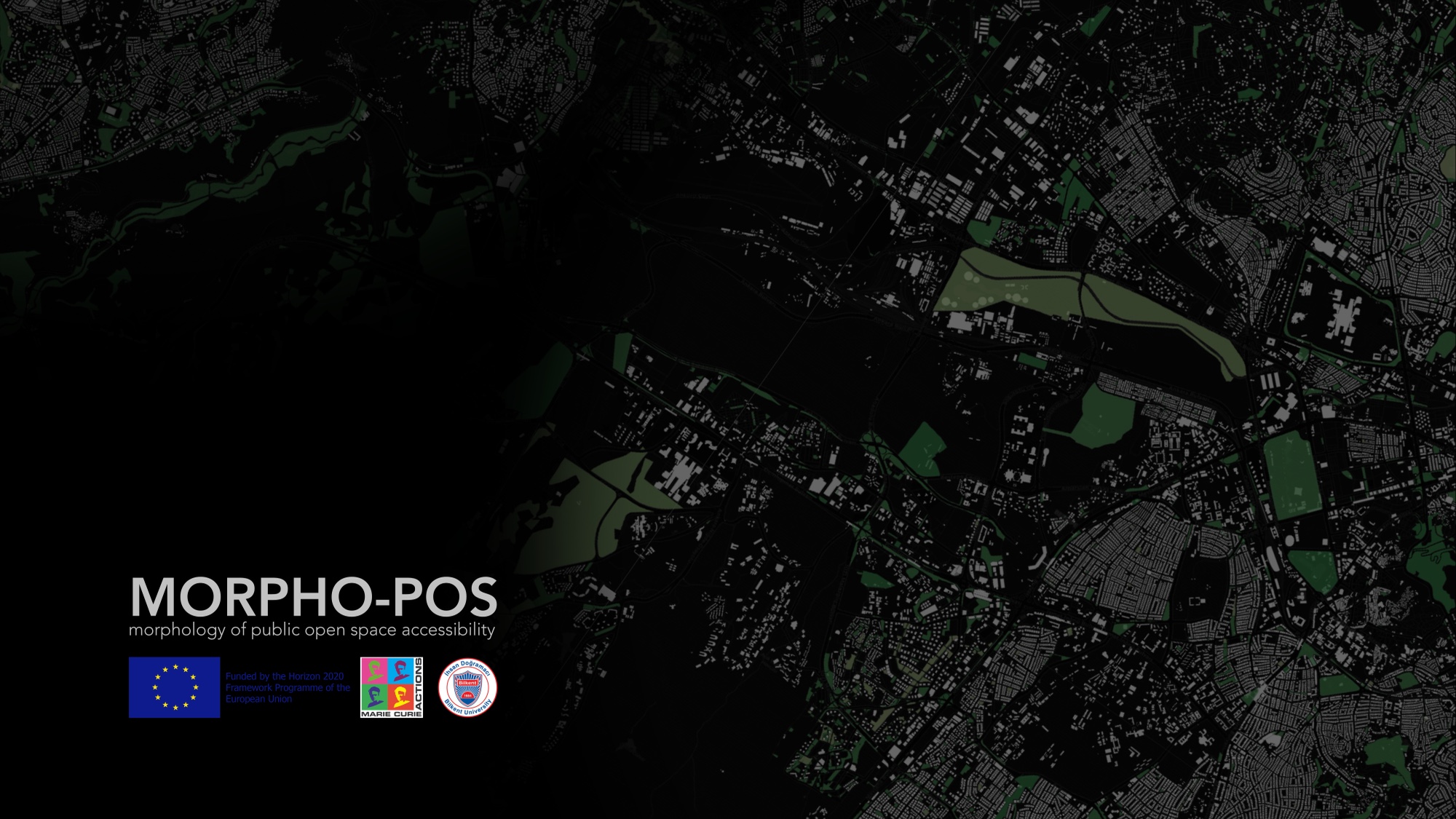
Dr. Onur Tümtürk has won a Marie Skłodowska-Curie Postdoctoral Fellowship, one of Europe's most competitive research awards, with his project proposal Morpho-POS, bringing a two-year, EU-funded fellowship to Bilkent LAUD.
- Faculty
- Dr. Onur Tümtürk
- Award
- Marie Skłodowska-Curie Postdoctoral Fellowship (Horizon Europe)
- Grant
- €149,365, 24 months (July 2026 – June 2028)
- Host
- Bilkent University, Urban Design & Landscape Architecture
- EU Project
- cordis.europa.eu
Dr. Onur Tümtürk has been awarded a Marie Skłodowska-Curie Postdoctoral Fellowship by the European Commission, among the most prestigious and competitive research grants in Europe. His proposal, Morpho-POS, was selected for funding under Horizon Europe and will run for two years, from July 2026 to June 2028, at Bilkent LAUD with a grant of €149,365. The award brings a major international research project to the department and recognizes both the researcher and the strength of the work he proposed.
About the project
Access to public open spaces (POS) is essential for health, well-being and environmental resilience, yet poor urban design limits who can reach them. Traditional accessibility metrics tend to overlook how the arrangement of buildings and streets shapes that access. Morpho-POS moves from simple metrics toward a holistic understanding of how urban morphology promotes or hinders access to public open space, and of whether accessibility as objectively measured aligns with how different users actually perceive it.
The project responds to three gaps in current research: the lack of a morphological focus on POS, the limited integration of measured and perceived accessibility, and the scarcity of studies in rapidly developing cities. Using Ankara as its case study, it combines urban morphometrics, GIS-based accessibility analysis, and qualitative go-along interviews, with machine learning and statistical analysis identifying distinct urban form types and their relationship to POS accessibility, complemented by residents' lived experience of it.
The result is an integrative framework for understanding POS accessibility together with evidence-based recommendations for equitable, POS-oriented urban retrofitting. The work contributes to UN Sustainable Development Goal 11.7 on inclusive and accessible public spaces, offering insights for planning practice across the EU and beyond.