İskenderun Urban Design Studio: Strata
LAUD 202 & 302 Vertical Urban Design Studio
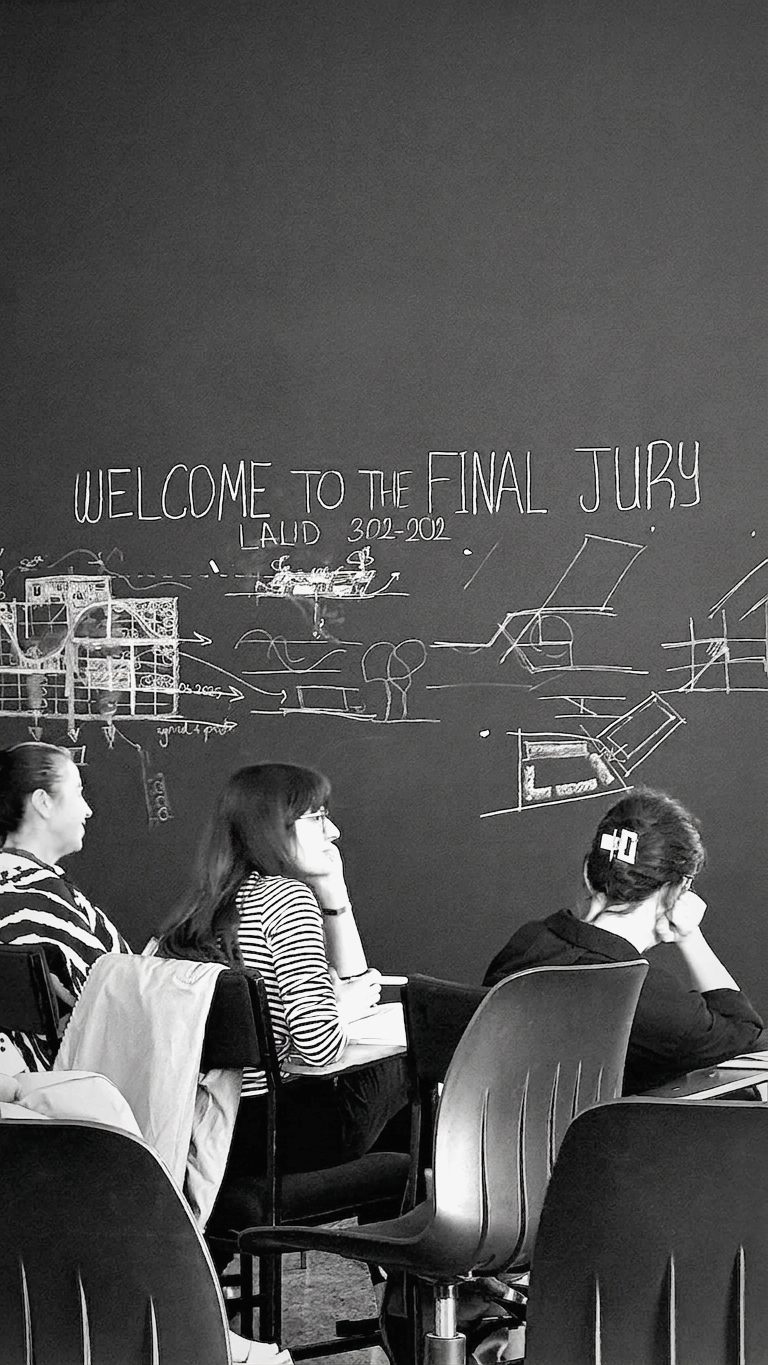
The LAUD 202 & 302 vertical urban design studio spent the Spring 2025 semester in İskenderun, working under the theme of strata. Seventeen students developed individual urban design projects, and the semester's work was collected in three printed studio booklets.
- Students
- Esra Naz Akgüneş, İpek Bayrak, İsra Dora Çanak, Atlas Ada Çelik, Ece Dağalp, İlayda Şimal Dalyanoğlu, İfakat Deveci, Öznur Işık, Zeynep İşcanoğlu, Ayşegül Kaya, Almina Sıla Kuran, Oğulcan Parlakay, Elifsude Şimşek, İrem Beray Taş, Göksu Toyran, Eylül Türk, Bedirhan Yenigün
- Instructors
- Hatice Karaca, Onur Tümtürk
- Booklets
- Access to booklets
The theme
Beneath İskenderun's contemporary surface lies an intricate accumulation of natural and human-made systems. Each layer holds memories of geological shifts, ecological transformations and urban dreams. Every stratum tells a story of continuous dialogue between environmental forces and human aspirations, creating a rich terrain for spatial investigation and imagination. This is strata.
The studio asked students to become both archaeologist and visionary. As archaeologists, they excavated the city's spatial narratives, from geological formations like the marshland to spatial formations like the French Mandate urban grid. As visionaries, they engaged with critical contemporary challenges: seismic vulnerability and soil conditions, evolving port-city relationships, fragmented urban fabric, shifting economic patterns and changing mobility needs.
Urban strata are both archive and catalyst. In İskenderun's layers we read not just histories but possibilities of what might emerge. Through careful excavation of the city's layers, we discover what was deposited by time and what could be activated for tomorrow: this is the task of excavating urban futures.
The process
The studio was structured in three interconnected phases. The first phase focused on conceptual exploration, where each student developed a critical reading of strata both as a theoretical concept and as a spatial phenomenon in İskenderun. The second phase engaged with excavation and documentation: systematic vertical readings of the city covering morphological evolution and built form typologies, street networks and connectivity, urban activity interfaces and economic networks, and the relationship between ecological infrastructure and public life.
In the final phase, students developed design interventions exploring multiple pathways toward their envisioned futures, ranging from protective conservation to bold addition, from subtle restoration to strategic transformation. Projects were expected to mediate between past and future through nuanced approaches rather than singular solutions.
The outcome
Seventeen individual projects were developed over the semester. The studio's work was brought together in three printed booklets: one dedicated to the collective analysis of the city and two collecting the design projects, continuing the publication practice started with the Gaziantep studio.
Student projects
Weaving the Regenerative Flow
Ece Dağalp
Expanded & Reimagined City Core
Göksu Toyran
Emergent Urban Development
İfakat Deveci
Productive Landscape: Reinterpretation of the Edges
Öznur Işık
Canal as a Living Corridor
Ayşegül Kaya
From Fragments to the Integrated Campus
Almina Sıla Kuran
Enhancing Transparency: Reintroducing Strata
İsra Dora Çanak
Living Edge
Esra Naz Akgüneş
Restoring the Urban Identity
Zeynep İşcanoğlu
Dissolving the Edges Through Assemblage
İpek Bayrak
Interwoven Landscapes: Assembling the Public Spaces
Eylül Türk
Constructing the Porous Fabric
Atlas Ada Çelik
Campus Thresholds: Active Meets Passive
Oğulcan Parlakay
Living with the Flow: Channel as a Catalyst
Bedirhan Yenigün
Recalling the Lost Spaces
İrem Beray Taş
Urban Stratigraphy: Revealing the Traces
İlayda Şimal Dalyanoğlu
Rethinking the In-Between Spaces
Elifsude Şimşek